
Tuesday, January 13, 2026 Security Releases
Node.js® is a free, open-source, cross-platform JavaScript runtime environment that lets developers create servers, web apps, command line tools and scripts.
1 min readNews
39 stories found.
Node.js® is a free, open-source, cross-platform JavaScript runtime environment that lets developers create servers, web apps, command line tools and scripts.
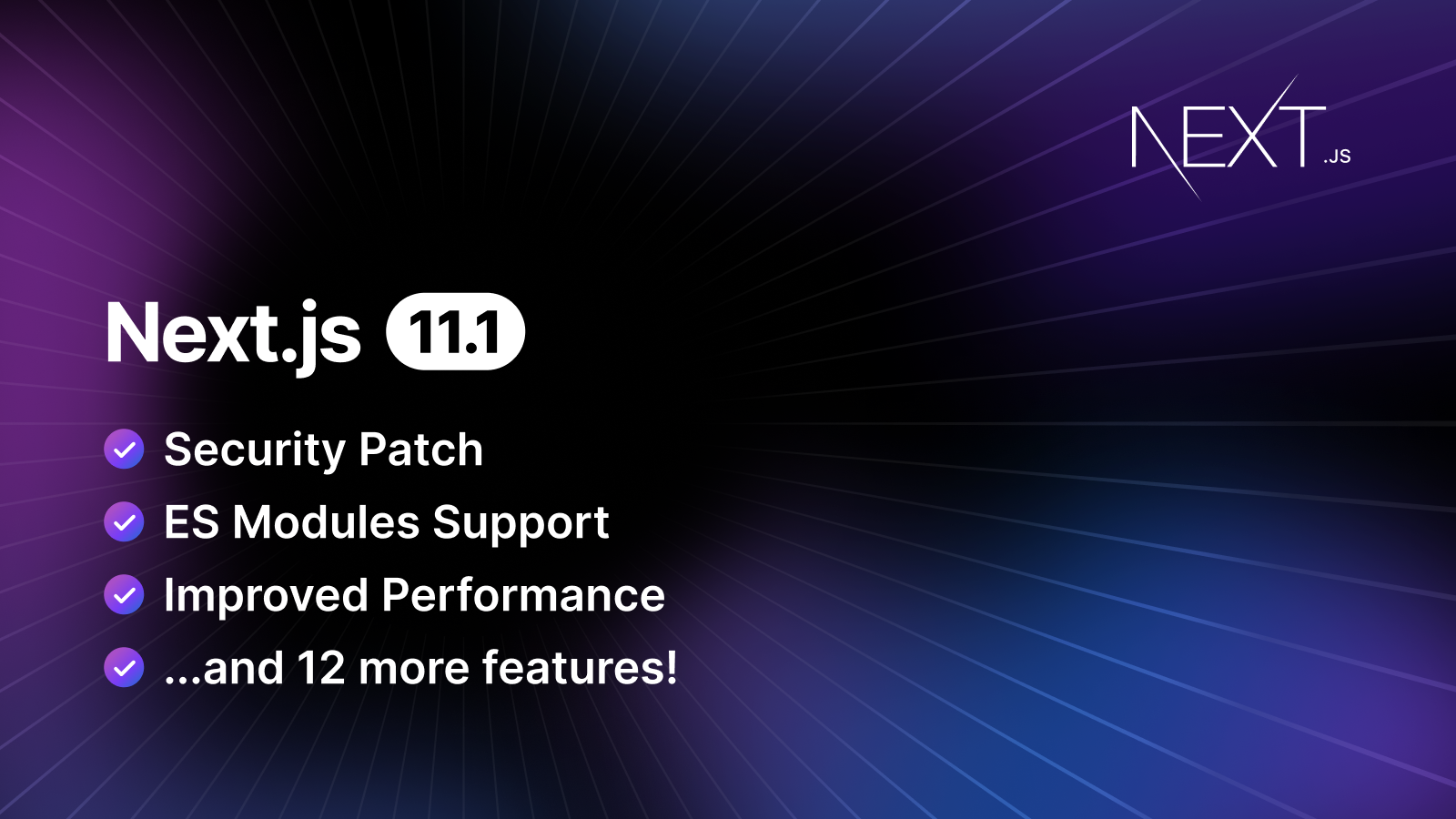
Next.js 11.1 introduces an important security patch, ES Modules support, performance improvements, Rust-based tooling, 2x faster data fetching when pre-rendering, and more!
Node.js® is a free, open-source, cross-platform JavaScript runtime environment that lets developers create servers, web apps, command line tools and scripts.
Node.js® is a free, open-source, cross-platform JavaScript runtime environment that lets developers create servers, web apps, command line tools and scripts.
Learn about what security protections are built-in Next.js and view a guide for auditing applications.

If you've ever tried to enforce a security policy across a fleet of Kubernetes clusters, you've probably run into a frustrating chicken-and-egg problem. Your admission policies are API objects, which means they don't exist until someone creates them, and they can be deleted by anyone with the right permissions. There's always a window during cluster bootstrap where your policies aren't active yet, and there's no way to prevent a privileged user from removing them.
The .spec.externalIPs field for Service was an early attempt to provide cloud-load-balancer-like functionality for non-cloud clusters. Unfortunately, the API assumes that every user in the cluster is fully trusted, and in any situation where that is not the case, it enables various security exploits, as described in CVE-2020-8554. Since Kubernetes 1.21, the Kubernetes project has recommended that all users disable .spec.externalIPs. To make that easier, Kubernetes also added an admission controller (DenyServiceExternalIPs) that can be enabled to do this. At the time, SIG Network felt that blocking the functionality by default was too large a breaking change to consider.
The 2026 Stack Overflow Developer Survey shows only 7% of developers trust AI output for important decisions. Here’s what that means for running agents safely.
Node.js® is a free, open-source, cross-platform JavaScript runtime environment that lets developers create servers, web apps, command line tools and scripts.
SIG-Etcd announces the availability of the first beta release of etcd v3.7.0. This new version of the popular distributed database and key Kubernetes component includes the long-requested RangeStream feature, as well as a refactoring and cleanup of multiple legacy components and interfaces. v3.7 will deliver improved security, better operational reliability, and an improved experience for working with large resultsets. First, however, the project needs users to test the beta. You can find v3.7.0-beta.0 here:
The Kubernetes project relies on transparency to empower cluster administrators and security researchers. One important way we do that is by publishing CVE records into the Common Vulnerabilities and Exposures database. As part of our ongoing effort to mature the official Kubernetes CVE Feed, we have identified some discrepancies. CVE records for a few older, unfixed issues incorrectly include a fixed version field. The Kubernetes Security Response Committee (SRC) will correct the affected CVE records on June 1, 2026. This may result in vulnerability scanners identifying these vulnerabilities in places where they were previously not detected.
Node.js® is a free, open-source, cross-platform JavaScript runtime environment that lets developers create servers, web apps, command line tools and scripts.