YOLO Mode: Agent Autonomy Without the Guardrails
YOLO mode lets an AI agent run without asking permission. Learn what it is, why it's risky, and how to run it safely.
1 min readNews
3 stories found.
YOLO mode lets an AI agent run without asking permission. Learn what it is, why it's risky, and how to run it safely.
Learn about the key benefits of sandbox environments with Docker including isolation, definable controls, secrets credential handling, and more.
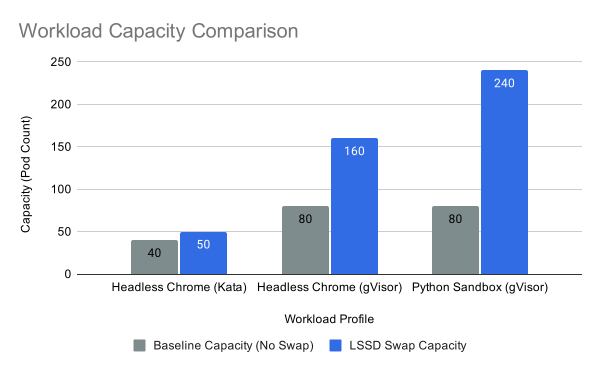
Memory is often the first hard limit a Kubernetes cluster hits. Nodes run out of RAM long before they run out of CPU, and the new wave of agentic AI workloads makes this worse. These workloads demand large memory footprints to start up and run untrusted code, then sit idle waiting for the next prompt. That idle but resident memory is expensive, and it caps how many pods a node can hold. This is where swap helps. Kubernetes support for running nodes with swap enabled reached General Availability in v1.34, and by backing that swap with fast NVMe solid state drives (SSDs), a node can page out dormant memory and pack in far more pods. This post explains how we benchmarked that approach across three workloads, including CI/CD kernel builds, sandboxed headless browsers, and isolated Python runtimes; we found density gains of up to 3×, often with little or no latency cost.