Subscribe

Technology · News

Technology

AWS Weekly Roundup: Amazon Bedrock Managed Agents powered by OpenAI, Q3 service availability updates, Kiro workflows, and more (October 5, 2026)

Last week, we announced a public preview of Amazon Bedrock Managed Agents powered by OpenAI, built on a customized version of OpenAI’s Agents API engineered to be AWS-native and integrated with AWS resources. You can now build agents optimized for OpenAI models that run entirely inside AWS with the identities, permissions, and governance controls you […]

1 min readNews
AWS Weekly Roundup: Amazon Bedrock Managed Agents powered by OpenAI, Q3 service availability updates, Kiro workflows, and more (October 5, 2026)
Technology

Spotlight on SIG Apps

As Kubernetes adoption has grown, the conversation has shifted beyond running containers to managing increasingly complex application lifecycles. Modern platforms support stateless web services, stateful databases, batch processing, AI workloads, and platform services. At the same time, they must remain reliable during upgrades, scaling events, and infrastructure failures. Every Kubernetes user relies on SIG Apps, whether they realize it or not. Deployments, StatefulSets, DaemonSets, Jobs, and CronJobs form the foundation of how applications are deployed, updated, scaled, and operated across the Kubernetes ecosystem.

8 min readNews
Technology

Scaling Kubernetes Workloads with Node Swap

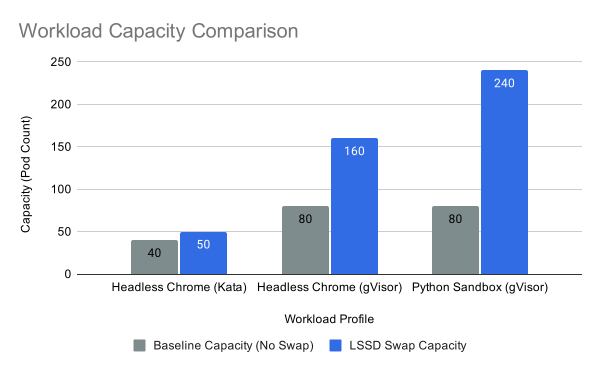
Memory is often the first hard limit a Kubernetes cluster hits. Nodes run out of RAM long before they run out of CPU, and the new wave of agentic AI workloads makes this worse. These workloads demand large memory footprints to start up and run untrusted code, then sit idle waiting for the next prompt. That idle but resident memory is expensive, and it caps how many pods a node can hold. This is where swap helps. Kubernetes support for running nodes with swap enabled reached General Availability in v1.34, and by backing that swap with fast NVMe solid state drives (SSDs), a node can page out dormant memory and pack in far more pods. This post explains how we benchmarked that approach across three workloads, including CI/CD kernel builds, sandboxed headless browsers, and isolated Python runtimes; we found density gains of up to 3×, often with little or no latency cost.

6 min readNews
Scaling Kubernetes Workloads with Node Swap
Technology

The Shift to cgroup v2 in Kubernetes: What You Need to Know

In Linux, cgroups (control groups) are a kernel feature used for managing system resources. Kubernetes uses cgroups to allocate resources like CPU and memory to containers, ensuring that applications run smoothly without interfering with each other. With the release of Kubernetes v1.31, support for v1 cgroup management moved into maintenance mode. Support for v2 cgroup management has been stable since Kubernetes v1.25. Compared with cgroup v1, cgroup v2 provides a single unified hierarchy, a more consistent interface, and a stronger foundation for resource isolation and modern resource-management features.

10 min readNews