React v19
The library for web and native user interfaces
18 min readNews

The library for web and native user interfaces
The library for web and native user interfaces
Explore GitHub’s latest transparency data and learn more about policy updates affecting developers and open source.
Build app-like experiences with Instant Navigations, server-rendered data, optimistic updates, and live client state in Next.js 16.3.
Next.js is preparing a scheduled August security release for August 26, 2026.
Next.js is moving the August security release forward to August 25, 2026.
AI/ML and complex batch workloads continue to push the boundaries of Kubernetes scheduling. Following the foundational workload-centric enhancements introduced in previous releases, Kubernetes v1.37 delivers the next major milestone in the Workload-Aware Scheduling (WAS) journey. In this release, the core Workload and PodGroup APIs—enabling gang scheduling—along with Workload-Aware Preemption (WAP) and shared DRA ResourceClaims for PodGroups, all graduate to Beta, solidifying their role in the Kubernetes ecosystem. To address the hierarchical scheduling requirements of modern high-performance distributed workloads, v1.37 introduces the new CompositePodGroup API. This new API allows expressing multi-level topology constraints, gang scheduling, and preemption policies for complex, heterogeneous groups of Pods. Crucially, this architectural expansion unlocks native scheduling support for advanced workload structures commonly managed by higher-order extension APIs such as JobSet and LeaderWorkerSet (LWS).
Kubernetes has many ways to describe what is happening on a Node. Readiness, taints, Pod state, labels, annotations, and provider-specific APIs each expose part of the picture. What has been missing is a shared, Kubernetes-owned way to say that a Node is draining, undergoing maintenance, or undergoing Graceful Node Shutdown. Kubernetes v1.37 introduces five well-known Node conditions that provide that description: DrainInProgress Drained MaintenancePlanned MaintenanceInProgress GracefulNodeShutdownInProgress
In Kubernetes, resource allocation has historically been a static decision made during a Pod's initial scheduling and placement. With the graduation of the core in-Place Pod resize feature to General Availability in v1.35, application developers and cluster operators gained the powerful ability to dynamically adjust CPU and memory allocations of running containers without incurring disruptive restarts or application downtime. However, in-place resizing introduced a unique resource scheduling gap: if a running Pod requested a resource scale-up that exceeded the host node's allocatable headroom, the Kubelet was forced to mark the request as Deferred. The Pod would remain parked in this state indefinitely, waiting for resources on the node to naturally free up.
Amazon CloudWatch Omni is the next evolution of CloudWatch — unified observability that brings your applications and AI agents into one reimagined experience, with auto-discovered topology, natural language queries, and AI-guided investigation powered by AWS DevOps Agent.
Amazon EventBridge announces an enhanced custom event bus for organizations scaling event-driven applications across teams and accounts. Deploy a single event bus shared across all AWS accounts in your organization, with ordering guarantees, a simplified Subscriber resource, and improved economics at scale.
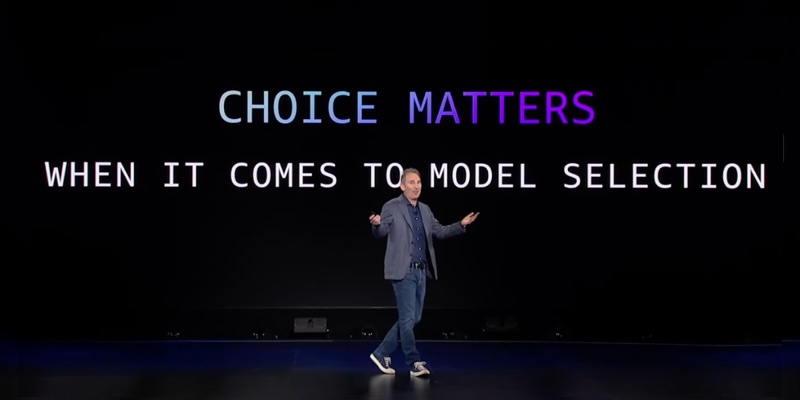
If there’s one theme that defined last week, it’s choice. The frontier models keep arriving, and the interesting question is no longer just “how smart is it?” but “which model fits this step, at this cost, at this latency?” That’s exactly what landed on Amazon Bedrock over the past few days: GPT-6 Sol and GPT-6 […]