Node.js 24.22.0 (LTS)
Node.js® is a free, open-source, cross-platform JavaScript runtime environment that lets developers create servers, web apps, command line tools and scripts.
1 min readNews
Node.js® is a free, open-source, cross-platform JavaScript runtime environment that lets developers create servers, web apps, command line tools and scripts.
Turbopack in Next.js 16.3 adds development memory eviction, persistent file cache for builds, experimental Rust React Compiler, and `import.meta.glob` support.
Next.js is moving to a formal security release process
The October 14, 2026 out-of-band security update for Next.js is now available

Kubernetes brings a wealth of features that make it easy to run your production workloads securely and reliably. While aspects like scheduling, health checks and resource limits are probably at the front of your mind, one other important feature of Kubernetes is production identity — how your workload can authenticate to other systems in order to do its job. Up until now, the primary production identity mechanism built into Kubernetes has been service account JWTs (JSON Web Tokens). These are cryptographically-signed tokens, issued by the control plane of your cluster, that let anyone in the world understand who is calling when your workload uses them.
I am excited that storage version migration (SVM) has graduated to General Availability (GA) in Kubernetes v1.37! After a number of releases of work and testing, the built-in StorageVersionMigration API (storagemigration.k8s.io/v1) and control plane controller are now fully stable and enabled by default across all v1.37 Kubernetes clusters. The problem with stale storage versionsIn Kubernetes, stored API resources are written using a specific storage version (schema representation). The way Kubernetes interacts with object storage fundamentally requires mutation of a resource in order to ensure that the latest storage version is used for all resources. This creates problems when you want to change the storage version of a resource.
I am excited to announce that etcd RangeStream is graduating to beta in Kubernetes v1.37. Paired with etcd v3.7, it reduces the memory the API server and etcd need to read a large collection, and makes peak usage more predictable. The cost of large readsThe API server serves most list and watch requests from its in-memory watch cache. Populating that cache requires reading a resource's full state from etcd, at startup and on every re-initialization. For a resource with many objects, or large ones, such as Pods, that read is expensive.
There’s a particular energy to mid-September in New York. Pumpkin spice lattes are flowing, temperatures are dropping, and it’s nearly sweater weather. The city is back at full speed, and so is the AWS launch calendar. This week that energy showed up in a new frontier model on Amazon Bedrock, a desktop app for Amazon […]
AWS has reimagined the getting started experience with smart and sensible defaults to help developers get started fast so that they can focus on building. New customers can sign up and get started right away with $100 in Free Tier credits, managed project environments, and simplified team and resource permissions. If their workload evolves, customers can activate advanced features to access the full breadth and depth of AWS in one step, with no migration required.
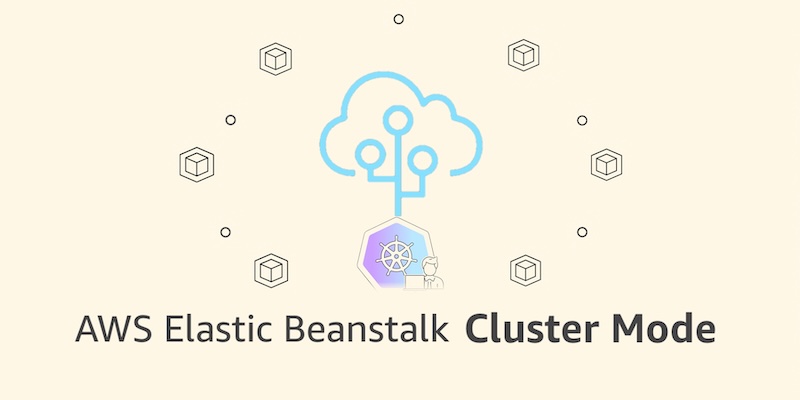
Run an application on AWS Elastic Beanstalk Cluster Mode without provisioning or operating the compute underneath it. You provide a container image or source code; Elastic Beanstalk with service-operated compute creates and operates the environment that runs it.
Hi, I’m Georgi, an independent entrepreneur, open source community organiser, and leader. I’m also a PSF Fellow and a recipient of the PSF Community Service Award. Although I currently live in Amsterdam, I am proud to represent communities across Asia. I have served on the PSF Board since 2023. I…